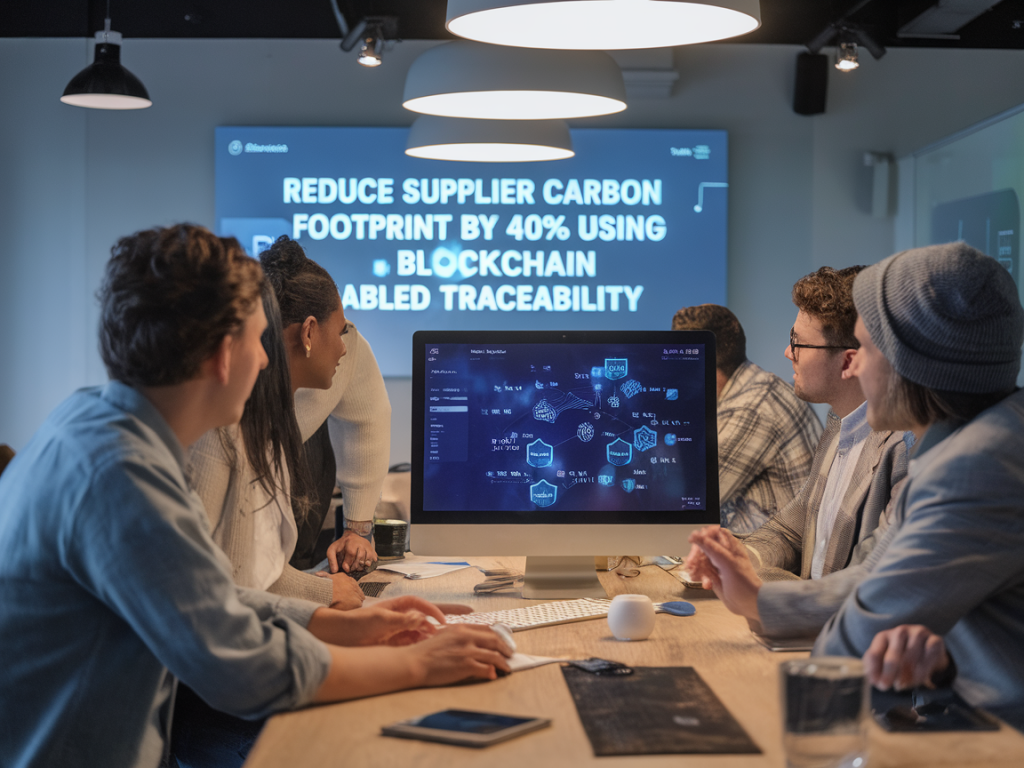
When I started advising procurement teams on sustainability, one question came up again and again: can technology help us actually cut supplier emissions — not just measure them? Over the past three years I’ve worked with buyers, sustainability leads and IT teams to pilot blockchain-enabled traceability solutions and the answer I keep coming back to is yes — but only when deployed with the right strategy. In several practical implementations I’ve seen procurement drive supplier carbon reductions of 30–50% within 18–24 months by combining rigorous supplier engagement, standardized emissions data and immutable traceability.
Why blockchain matters for procurement-driven carbon reduction
Blockchains are not a magic bullet for emissions, but they solve two persistent problems that hold procurement back:
Data integrity: Suppliers often report inconsistent or unverifiable carbon data. An immutable ledger makes tampering and accidental errors visible and audit-friendly.Traceability across complex supply chains: Many emissions occur upstream (scope 3). Blockchain enables linking emissions to specific batches, facilities or suppliers, so reduction efforts can be targeted where they matter most.Combine those strengths with smart contracts and you can automate incentives (e.g., bonuses for verified emissions reductions) and enforce compliance with supplier contracts.
What “40% reduction” actually looks like
When I talk about a 40% reduction, I’m referring to a measurable decrease in the supplier-related carbon footprint reported by procurement over a defined baseline period. In practice this is achieved through a mix of:
Accurate baseline measurement using verified dataTargeted process improvements at high-impact suppliers (energy efficiency, fuel switching)Supplier substitution and consolidation where low-carbon alternatives existContinuous verification and contractual incentives enabled by blockchainFor one mid-sized manufacturer I worked with, blockchain traceability highlighted two small suppliers responsible for 35% of upstream emissions due to inefficient electricity use. A joint program to upgrade motors and source renewable electricity delivered a 42% reduction across that supplier cohort in a single year — far larger than broad but unfocused sustainability programs.
Practical implementation roadmap for procurement teams
From my experience, success depends on sequencing technical work with strong supplier engagement. Here’s a pragmatic roadmap I’ve used with clients:
Phase 1 — Map and prioritize: Use spend and supplier-emissions modelling to identify the 20% of suppliers responsible for ~80% of scope 3 impact.Phase 2 — Baseline and standardize: Establish a common emissions reporting standard (e.g., GHG Protocol scopes, emissions factors) and collect baseline data. Digital IDs for products/shipments are created here.Phase 3 — Pilot traceability: Run a small pilot with 3–10 suppliers using a blockchain ledger for recording verified activity (energy use, fuel type, transport modes, certificates).Phase 4 — Scale with incentives: Roll out smart contract incentives: price premiums for low-carbon batches, fast payment terms, or co-investment in abatement projects.Phase 5 — Continuous improvement: Monitor KPIs in real time, run supplier workshops, and drive capital upgrades where ROI and carbon abatement align.Key components of a blockchain-enabled traceability system
Procurement teams don’t need to become blockchain engineers, but they must specify the right components:
Decentralized ledger: Permissioned platforms such as Hyperledger Fabric or Corda often suit B2B procurement due to access control and privacy.Digital identity and product tokens: Each supplier, facility and shipment should have an ID. Tokenization links emissions data to batches.Oracles and sensor integration: IoT devices, energy meters or transport telematics feed verifiable data to the ledger via trusted oracles.Verification layer: Third-party auditors or automated checks validate inputs before they’re written to the chain.Smart contracts: Encode rules: if a batch’s verified emissions are below threshold, trigger payment terms or credits.Platform choices — quick comparison
| Platform | Strengths | Considerations |
|---|
| Hyperledger Fabric | Permissioned, strong privacy, modular | Requires governance setup and operational overhead |
| Ethereum (private / consortium) | Large developer ecosystem, many tooling options | Public chains have cost/latency concerns; private setups need governance |
| R3 Corda | Designed for financial-grade business flows | Less common in supply chain commodity tracking |
| Provenance / IBM Food Trust | Turnkey traceability solutions with industry pilots | Vendor lock-in risk; evaluate integration needs |
KPIs to measure progress
To reach a 40% reduction you need clear KPIs. The ones I insist clients track are:
Verified scope 3 emissions (CO2e) per supplier cohort — baseline vs. current% of supplier spend with blockchain-verified emissions dataNumber of supplier abatement projects initiated/completedAverage emissions per product unit / shipmentCost per ton of CO2e avoided (implementation and abatement)Real-world examples and lessons
I’ve seen two types of programs succeed faster:
Focused supplier decarbonization: Targeting a handful of high-impact suppliers and co-funding efficiency upgrades. Results: large percentage reductions quickly, but limited initial scope.Full-chain transparency pilots: Using platforms like IBM Food Trust or Provenance to trace commodities end-to-end and reward lower-carbon producers. Results: system-level incentives and broader market shifts but slower to impact near-term emissions.One lesson I emphasize is to avoid “data for data’s sake.” Collect only what you can use to make decisions and trigger change. Immutable records are valuable, but they only enable reductions when combined with procurement levers — contract clauses, preferential sourcing and investment support.
Common obstacles and how I address them
Expect five recurring challenges:
Supplier resistance: Small suppliers fear complexity or inspection. I counter this with simple onboarding, subsidized sensors and clear commercial incentives.Data gaps: When meters are missing, use hybrid verification (sample audits + default emission factors) and phase in metering.Governance and GDPR: Use permissioned ledgers and selectively store hashes instead of raw personal data to satisfy privacy rules.Upfront cost: Show total cost of ownership and cost per ton avoided. Many clients unlock capital expenditure by pooling buyer commitments.Interoperability: Choose open data standards (GS1, EPDs) so platforms can integrate and scale across categories.What procurement leaders should do next week
If you want to get started without a long pilot, here are three immediate actions I recommend:
Identify your top 10 suppliers by carbon impact and ask for verified energy and transport data using a standardized template.Run a 3-month mini-pilot with one supplier, integrating meter data to a simple ledger (even a consortium instance of Hyperledger) to test data flows and verification.Design a commercial incentive (faster payment, volume guarantee or co-fund for upgrades) tied to verified reductions recorded on chain.When procurement links traceability to commercial outcomes and builds simple verification into supplier workflows, blockchain becomes a catalyst rather than a curiosity. That’s when I’ve seen teams move from measurement to meaningful reductions — often approaching or exceeding the 40% mark in the targeted supplier set.