Cryptocurrency

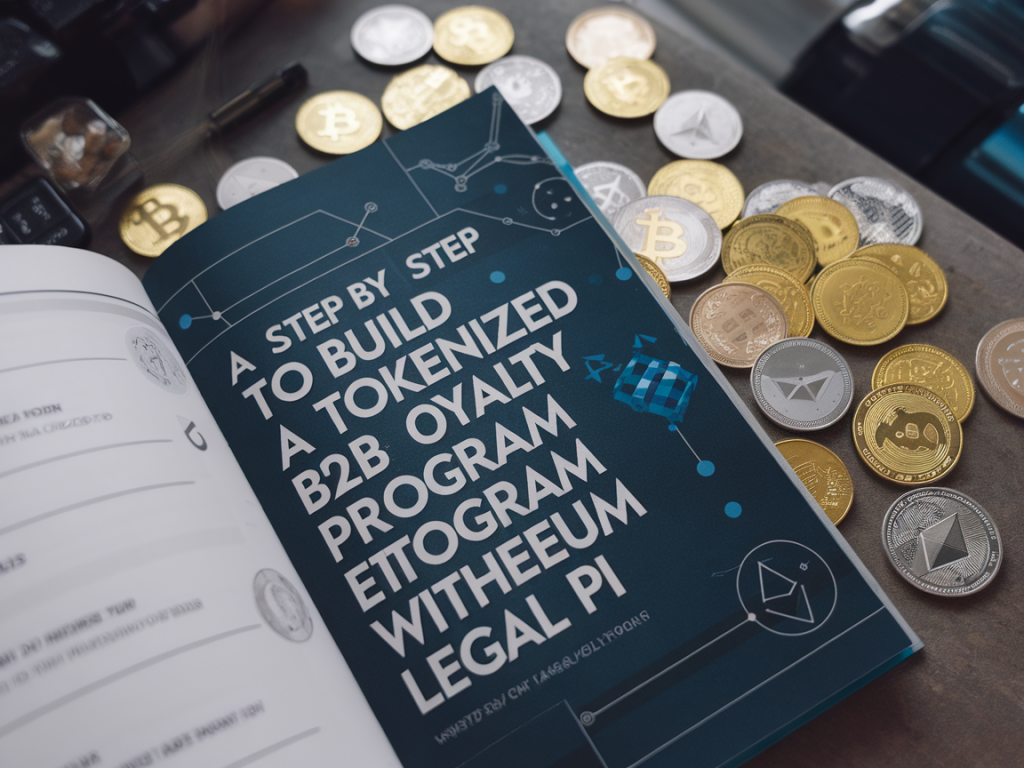
A step-by-step playbook to build a tokenized b2b loyalty program on ethereum without legal pitfalls

A step-by-step playbook to build a tokenized b2b loyalty program on ethereum without legal pitfalls

When I first began advising clients on blockchain-based loyalty programs, I saw a recurring pattern: enthusiasm for tokens, but confusion about the operational and legal realities. Over time I designed a repeatable playbook that balances customer experience, technical design, and regulatory hygiene. Below I share a practical, step-by-step guide to build a tokenized B2B loyalty program on Ethereum while minimizing legal pitfalls. I’ll walk you through choices I made in real projects, pitfalls I avoid, and the tools I recommend.

Start with the strategy: objectives, stakeholders, and value proposition

Before any code gets written, you need clarity. Ask yourself and your partners:

  • What business outcome are we pursuing? (e.g., retention, cross-selling, partner incentives)
  • Who are the participants? (corporate buyers, channel partners, distributors)
  • What value will the token represent? (discount rights, access, tradable commodity, reputation)
  • Is the token meant to be transferable between businesses or strictly within a closed network?
  • These answers determine everything from token design to KYC requirements. For example, if tokens are freely tradable and expected to appreciate, regulators may treat them like securities. If tokens are non-transferable utility credits for partner discounts, the risk profile is lower.

    Choose the right token model and standard

    Not all tokens are equal. Here are the main patterns I use for B2B loyalty:

  • Accounting/credit tokens (non-transferable or permissioned transferable): Act as loyalty credits redeemed for goods or services. Consider non-transferable ERC-20 variants or permissioned tokens (ERC-1400/3643) that restrict transfers to whitelisted addresses.
  • NFT-style tokens (unique entitlements): Use ERC-721/1155 for one-off privileges, tiered status, or vouchers redeemable at partners.
  • Hybrid models: A stablecoin-backed reward layer for monetary-equivalent credits plus NFTs for premium access.
  • For B2B, I favor permissioned tokens. They give you administrative control: you can freeze addresses, enforce whitelists, and implement KYC gating. Open-source building blocks like OpenZeppelin’s libraries and the ERC-1400 family are valuable here.

    Pick your chain and layer-2 carefully

    Mainnet Ethereum is secure but expensive for frequent microtransactions. I usually recommend a Layer-2 or sidechain for B2B loyalty programs where operational efficiency matters:

  • Polygon, Optimism, Arbitrum for low gas costs and EVM compatibility
  • Consider a private/consortium chain for tightly controlled partner networks
  • Make sure the chain supports your chosen token standards and offers robust tooling (Etherscan/PolygonScan equivalents, RPC providers like Alchemy or Infura)
  • I’ve run pilots on Polygon to keep costs low while maintaining interoperability with mainnet tools.

    Design governance and permissions

    Define who can mint, burn, transfer, and freeze tokens. For B2B use-cases I usually implement:

  • Minter role for the issuer (your company) to allocate tokens to partners
  • Burn/Redemption role for claims processing at the point of sale
  • Admin role for whitelist and KYC management
  • Role-based access control (OpenZeppelin’s AccessControl) makes this manageable. Keep multisig or Gnosis Safe for admin keys to reduce operational risk.

    Embed compliance from day one

    This is where many programs fail. Regulators focus on token economics and distribution. To avoid legal pitfalls I always:

  • Assess token classification (utility vs. security). If your token confers profit expectations, treat it with the same rigor as a securities project.
  • Limit transferability where possible
  • Implement KYC/AML for recipients and large transfers. Integrate providers such as Onfido, Jumio, or KYC3 on the onboarding pipeline.
  • Use whitelisting smart contract patterns so only verified partner addresses can receive tokens
  • Keep detailed off-chain records mapping corporate entities, VAT IDs, and contract terms to wallet addresses
  • These measures don’t replace legal counsel — they reduce exposure and make audits far easier.

    Token economics and taxation

    Decide how tokens are issued and what happens at redemption. Key elements:

  • Issuance: Are tokens granted as one-off incentives, earned per transaction, or purchased?
  • Expiration: Do tokens expire? Expiration limits liability and clawback issues.
  • Redemption rate: Fixed discount vs. dynamic value tied to a fiat/stablecoin benchmark
  • Tax treatment: In the UK, tokens given as rewards may be taxable benefits or VAT-relevant when redeemed for goods/services. Work with a tax advisor early. Keep records of issuance date, fair market value at issuance, and redemption details.
  • Privacy and data protection

    Blockchain is public by design. If you link corporate data to addresses, GDPR and other data laws matter. I adopt these practices:

  • Avoid storing personal data on-chain. Map wallet addresses to off-chain records stored securely (encrypted databases).
  • Use consent-based onboarding so businesses explicitly agree to wallet linkage.
  • Provide a process to dissociate addresses (e.g., when an employee leaves a partner organization).
  • Smart contracts and security

    Do not skimp on audits. I require at least one reputable audit (e.g., ConsenSys Diligence, Trail of Bits) for production contracts and a code review before any pilot. Additional recommendations:

  • Use audited libraries (OpenZeppelin)
  • Deploy upgradeable contracts carefully — prefer proxy patterns with pause and emergency freeze functions
  • Write comprehensive unit and integration tests (Hardhat/Truffle)
  • Maintain an incident response playbook and bug bounty program (HackerOne, Immunefi) if user value is high
  • Operations: onboarding, distribution, and redemption flows

    Design seamless UX for business users. My recommended flow:

  • Partner signs a legal agreement (off-chain)
  • Partner submits entity and KYC data in your portal
  • After verification, an address is whitelisted on-chain
  • Tokens minted to that address or to a custodial address controlled by the partner
  • Redemption via API at participating vendors — the backend validates token burn and issues discount/credit
  • Use wallets suited to business users: MetaMask or wallet-connect compatible custody wallets, or offer a managed custody option. Consider integrations with accounting systems (Xero, QuickBooks) to reconcile redemptions.

    Interoperability and partner integrations

    A B2B loyalty program succeeds when partners adopt it. I implement:

  • APIs for partners to check balances and validate vouchers
  • SDKs for POS systems to integrate redemption (Node/REST, or direct smart contract calls)
  • Clear SLAs and developer docs — friction kills adoption
  • Component Recommended tools
    Smart contract libraries OpenZeppelin, ERC-1400 templates
    Chain / L2 Polygon, Optimism, Arbitrum
    KYC/AML Onfido, Jumio, KYC3
    RPC providers Alchemy, Infura
    Audits / Security ConsenSys Diligence, Trail of Bits, Immunefi

    Monitoring, reporting, and governance

    Operational transparency is essential for partners and regulators. I recommend:

  • On-chain dashboards (The Graph, custom analytics) for token flows
  • Periodic compliance reports tying off-chain identities to on-chain activity
  • A governance framework to change program parameters (multisig, defined upgrade process)
  • When to consult legal and tax professionals

    Early. I always involve counsel when:

  • There’s a possibility tokens could be considered investments
  • Cross-border issuance or redemption creates complex VAT/withholding obligations
  • Your program uses secondary markets or transfers that could impact consumer protections
  • Good legal advice helps you design token mechanics that fit regulatory expectations rather than retrofitting compliance to a risky model.

    Building a tokenized B2B loyalty program on Ethereum (or an L2) is an exciting opportunity, but it requires aligning product design, tech architecture, and regulatory guardrails. Follow these steps, prioritize permissioned transfers and KYC, keep clear off-chain records, and invest in audits and legal counsel. With these precautions, tokens can unlock new ways to incentivize partners while keeping legal risk manageable.

    You should also check the following news:

    Which three-ai combo automates lead qualification while preserving the human touch for enterprise sales
    Marketing

    Which three-ai combo automates lead qualification while preserving the human touch for enterprise sales

    I’m often asked by enterprise sales leaders: can AI automate lead qualification without turning...

    Apr 05 Read more...
    How to cut onboarding time by 60% using an ethereum-powered supplier scorecard
    Cryptocurrency

    How to cut onboarding time by 60% using an ethereum-powered supplier scorecard

    I want to share a practical playbook I built after watching procurement and supplier onboarding...

    Apr 06 Read more...