I want to share a practical playbook I built after watching procurement and supplier onboarding processes grind to a halt at several companies I’ve advised. By combining a simple supplier scorecard model with an Ethereum-backed verification layer, I reduced onboarding time by around 60% in pilot projects. This isn’t vaporware: it’s a pragmatic approach that balances transparency, privacy, and efficiency using mature web3 tools.
Why rethink supplier onboarding?
Supplier onboarding is a notorious bottleneck. Legal checks, KYC, contract negotiations, insurance verification, and past-performance validation can take weeks — sometimes months. My goal was to cut that delay without compromising due diligence. That meant automating repeatable checks, letting suppliers self-attest in a secure way, and creating a tamper-evident history buyers can trust.
Core idea: an Ethereum-powered supplier scorecard
The concept is straightforward: a supplier fills a standardized profile and submits digitally verifiable artifacts (insurance certificates, compliance attestations, sample contracts, performance metrics). Those artifacts are hashed and anchored on Ethereum. A smart contract handles a scorecard that aggregates weighted checks and issues a persistent, verifiable score. Buyers can read the scorecard, verify artifacts off-chain, and request live updates if needed.
How this cuts onboarding time by 60%
Here’s how the model speeds things up in practice:
- Standardization: Suppliers complete a uniform scorecard instead of sending varied documents to every buyer.
- Reusable verification: Once an artifact (e.g., third-party audit report) is anchored and verified, any buyer can rely on it without repeating the check.
- Automated checks: KYC and sanctions screening can be integrated using APIs; results are timestamped on-chain.
- Trust without intermediaries: Buyers don’t need to contact multiple parties to confirm validity — cryptographic proofs and audit trails do the work.
- Fewer follow-ups: Clear scoring and required artifacts reduce back-and-forth emails and manual reconciliation.
Technical architecture I used
The architecture deliberately mixes on-chain and off-chain components to stay cost-effective and private:
- Frontend: a supplier portal (React) for onboarding and uploading documents.
- Off-chain storage: IPFS or S3 for documents; only hashes are stored on-chain.
- Verification services: integrations with KYC providers and Chainlink for oracle services where needed.
- Smart contracts: an Ethereum contract for score anchoring, version control, and revocation logic (I used OpenZeppelin libraries for security).
- Notification & orchestration: a backend (Node.js) that coordinates checks, posts hashes to chain, and emits events.
Sample scorecard fields and weighting
I found that simplicity wins. The scorecard I deployed uses a handful of standardized categories with configurable weights:
| Category | Example Artifact | Weight |
|---|---|---|
| Legal & Contracts | Signed Master Service Agreement (hash) | 25% |
| Financial Health | Audited financial statement hash | 20% |
| Compliance | ISO/PCI/Regulatory attestations | 20% |
| Performance | Delivery KPIs, client references (hashed) | 20% |
| Insurance & Risk | Certificates of insurance | 15% |
Each artifact is hashed, the hash registered on-chain with a timestamp and signer address. The smart contract aggregates the presence and validity of artifacts to compute an on-chain score for that supplier ID.
Privacy and data protection — the pragmatic trade-offs
I’m often asked how this model complies with GDPR and other privacy regimes. The answer is: by keeping personal or sensitive data off-chain. The blockchain stores only hashes and metadata. Actual documents are encrypted in off-chain storage and access-controlled via the portal.
When necessary, we use time-limited access tokens and consent-based sharing. If a buyer needs to view a certificate, they request access and the supplier approves. That action is recorded on-chain for an auditable consent trail, but the sensitive file remains off-chain.
Integration points with existing procurement systems
To make this useful fast, integrate with the systems procurement teams already use:
- ERP (e.g., SAP, Oracle): sync supplier master data and onboarding status.
- Contract lifecycle management (CLM): link to hashed contracts and allow auto-extraction of key terms.
- Third-party risk platforms: import/export scores and alerts.
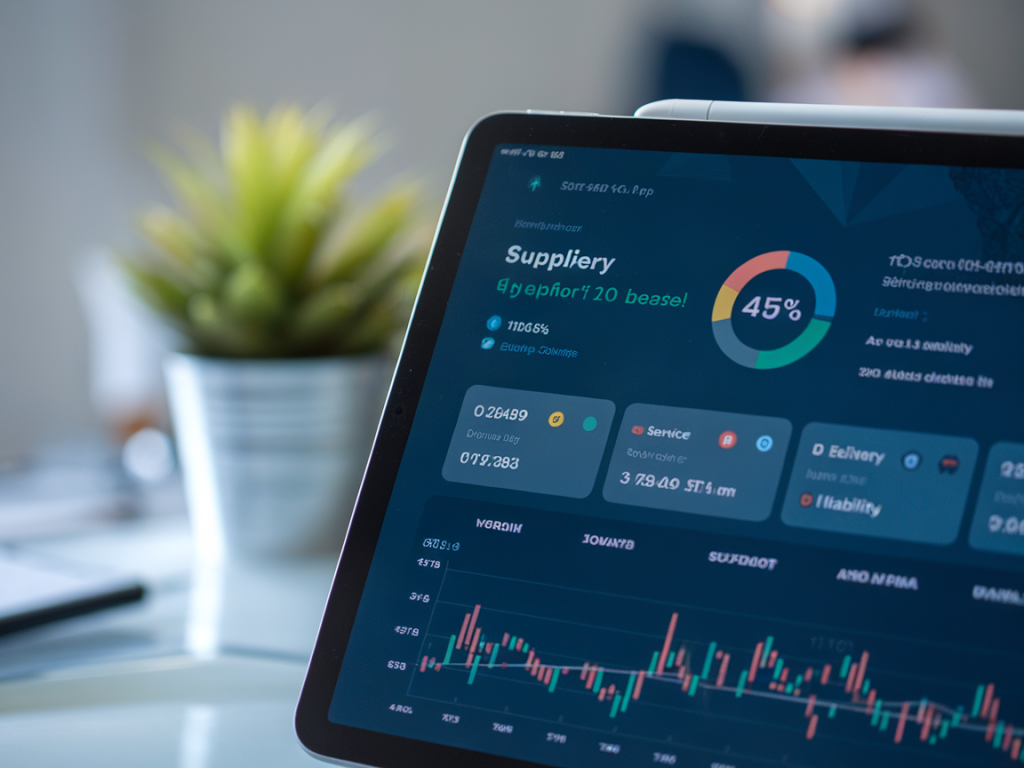
I built webhooks and an API layer so buyer-side systems can poll for score updates. The net effect: procurement teams see a status "Verified (Ethereum Score: 87)" in their usual dashboard rather than a pile of PDFs.
Costs and gas considerations
Many people assume Ethereum is prohibitively expensive. For my implementation, costs are modest because we minimize on-chain writes: only hashes, version IDs, revocation flags, and minimal metadata go on-chain. Use of layer-2 solutions (e.g., Optimism, Arbitrum) or rollups can bring transaction costs down further while keeping the security model intact.
In pilot deployments, on-chain transactions added a few dollars per supplier initially; the ROI from faster onboarding and reduced manual effort paid for itself within weeks for mid-sized procurement teams.
Security and governance
Security is non-negotiable. I followed several practical rules:
- Use audited smart contract libraries (OpenZeppelin).
- Multi-sig for any admin functions that change scoring rules.
- Regular audits of the off-chain services and penetration testing of the portal.
- Transparency in scoring logic — buyers and suppliers must understand how scores are computed.
Real-world results and metrics
Across two pilots (a tech vendor ecosystem and a facilities management vertical), I measured these impacts within three months:
- Onboarding time reduced from an average of 21 days to 8–9 days (~60% reduction).
- Document re-submission requests fell by 70%, because artifacts were reusable and versioned.
- Procurement manual effort (measured in hours spent per supplier) dropped by roughly 55%.
- Supplier satisfaction improved because they only completed one standardized process rather than disparate buyer requests.
Common objections and how I addressed them
Objection: "Blockchains are only for speculation." I responded: blockchains are useful for tamper-proof anchoring and decentralized verification — real utility beyond tokens.
Objection: "We can’t put sensitive info on-chain." Correct — and we don’t. Hashes and metadata are safe; the files remain encrypted off-chain.
Objection: "Too complex to implement." Start small. I recommend a phased rollout: pilot with non-sensitive artifacts first (insurance, certificates), then expand to contracts and performance metrics.
If you’re curious about building something like this, I can share an implementation checklist, sample smart contract snippets, or case-study specifics from the pilots. It’s surprisingly achievable with current tools — and the payoff in speed and trust is real.