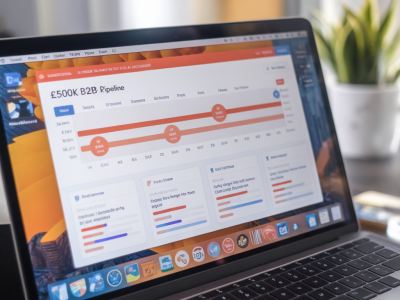
I’ve spent years watching freemium funnels leak value at every stage: enthusiastic sign-ups that never return, casual users who never discover core value, and a handful of customers who convert but never scale their spend. What changed everything for me was building a simple, repeatable three-step Intercom sequence that turns freemium users into £100k annual customers — not overnight, but predictably over 6–12 months.
Why a three-step sequence — and why Intercom?
Freemium funnels work when users experience value quickly and then see a clear path to more value with a paid plan. Intercom (the product) is perfect for this because it lets you combine contextual messaging, behavioral rules, and personal outreach without building bespoke backend tools.
My approach is deliberately minimal: three messages that map to a user’s lifecycle moments — activation, expansion, and commitment. Each step has a specific objective, a simple script, and a trigger based on real behaviour. When chained together, they create a rhythm that nurtures value discovery and monetisation.
The three steps: Activation, Expansion, Commitment
Below I explain each message, why it works, the exact copy I use, ideal triggers, and how to measure success.
- Activation: Make them “aha” in week 0–2.
- Expansion: Surface premium outcomes in week 2–8.
- Commitment: Convert intent into revenue at months 1–6.
Step 1 — Activation: the "quick win" message
Objective: Drive a first meaningful action that proves product value. If users don’t hit one core activation metric in the first 48–72 hours, they’re unlikely to convert later.
Trigger: 24 hours after sign-up OR when a user has performed 0 core actions in 48 hours.
Intercom medium: In-app message + email fallback.
Script I use (short, conversational):
“Hey — quick tip from me: try [core action] now. It only takes 60 seconds and shows you how [big benefit]. Click here to try it with guided help.”
Why it works: It’s specific, time-bound, and reduces friction with a guided flow. We link to an in-app checklist that completes the activation for the user.
Step 2 — Expansion: the "paid feature reveal"
Objective: Show how a paid feature multiplies the value they just experienced. This is where customers start to imagine using your product at scale.
Trigger: 7–21 days after activation OR after hitting the activation metric x times (shows engagement).
Intercom medium: Targeted Product Tours + a behaviour-triggered message.
Script I use (educational + case study):
“Nice work getting [result]. Teams like [customer brand] got 3x more [outcome] by adding [premium feature]. Want me to enable a trial so you can test it on your data?”
Why it works: People respond to social proof and to language that ties the premium feature to scalably better outcomes. Offering a short trial reduces risk and increases trial-to-paid conversion.
Step 3 — Commitment: the "human touch close"
Objective: Convert high-intent users into paying customers and identify accounts with £100k ARR potential for an enterprise motion.
Trigger: User uses premium trial features or reaches specified usage thresholds (e.g., seats, transactions, volume) indicating expansion potential.
Intercom medium: Personal message from an account owner (real human) with calendar link + optional limited promotion.
Script I use (personal, consultative):
“Hi — I’m here to help. I saw you’ve been using [feature] — looks like you’re heading toward [milestone]. Want to hop on a 20-minute call to map out how to scale this across your team and forecast ROI? Here’s my calendar—pick a time.”
Why it works: High-value customers want ROI clarity and an individual to align on procurement and rollout. A human touch also surfaces objections (budget, stakeholders, integrations) early so we can address them.
Segmentation and prioritisation: who gets the human touch?
Not every freemium account is worth a sales rep. I segment by three signals:
- Usage intensity (daily active users, key-feature usage)
- Company fit (industry, company size, revenue estimated via Clearbit)
- Intent signals (trial requests, API keys, import of large datasets)
We then assign a lead score and only route accounts above a threshold to an SDR or AM. This keeps human outreach efficient and focused on potential £100k ARR accounts.
Scripts, timing and tone — practical examples
Here are condensed versions of the three scripts I deploy from Intercom:
- Activation: “Try this walkthrough — 1 minute to see [benefit].”
- Expansion: “Want a free 14-day trial of [premium feature] to test on your data?”
- Commitment: “Can we book 20 minutes to plan rollout and ROI?”
Timing matters: front-load activation within 48 hours, start expansion between days 7–21, and escalate to human outreach once usage demonstrates intent (typically 2–8 weeks).
KPIs to track and a sample dashboard
Focus on the conversion funnel, not vanity metrics:
- Activation rate: % of sign-ups that hit the core action
- Trial opt-in rate: % activating a paid trial after expansion messaging
- Paid conversion rate: % of trialers converting to paid
- Average revenue per account (ARPA) and churn
| Metric | Benchmark | Target |
|---|---|---|
| Activation rate | 30–50% | 50%+ |
| Trial opt-in | 8–15% | 15–25% |
| Trial→Paid | 20–30% | 30–50% |
| ARPA (annualised) | £600–£5,000 | £10k+ for enterprise |
How to scale to £100k annual customers
Getting an individual to pay is one thing. Building a customer to £100k ARR requires:
- Packaging value with scalable seats, usage tiers, or feature add-ons.
- Running expansion plays after onboarding: quarterly business reviews, customized playbooks, and success milestones.
- Capturing and communicating ROI so the buyer can justify larger budgets internally.
I often create a bespoke “Scale Plan” during the Commitment call: a 6–12 month roadmap with milestones, expected outcomes, and price points. This removes ambiguity and converts purchase conversations into project plans.
Common questions I get — and quick answers
Will three messages annoy users? Not if they’re contextual and triggered by behaviour. The goal is helpfulness, not frequency.
What about GDPR and compliance? Always ensure consent for messages, use legitimate interest where appropriate, and log outreach. Intercom supports GDPR features; pair it with your legal framework.
Do you need Intercom to do this? No — any customer messaging + in-app guidance platform (Customer.io, HubSpot, Drift) can implement the flow. Intercom is just what I used and found fast to iterate with.
How long until you see results? Expect early lift in activation within weeks. Meaningful revenue impact — customers hitting £100k ARR — is a multi-quarter play that depends on product-market fit and enterprise motion readiness.